I saw the silminga today.
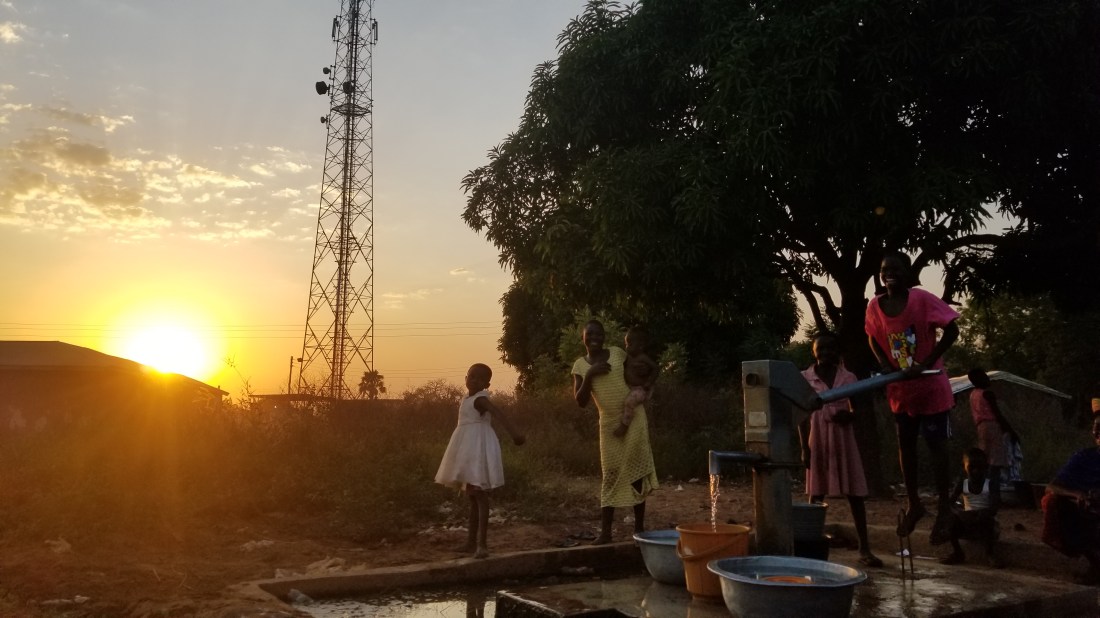
I was at the borehole with Adam and Esther, fetching water for Madam Rose, when I suddenly saw him approaching us with his bicycle and jerry can. He was wearing house clothes, like my father after he comes back from farm. He smiled at us and greeted us. Then he removed the jerry can from the bicycle and sat on it, waiting for Esther to finish filling her bucket.
He didn’t sit well. I think they have different jerry cans in his place.
When Esther was finished, he stood up and put his jerry can under the spout. Adam began to pump, but the white man smiled and took over pumping. Adam was confused. Esther laughed. I told the man that he shouldn’t pump because he’s a teacher. He just put on that same smile and shook his head and said that it was fine. I told him to see how we are even getting water for Madam Rose. But the white man gave a small laugh and said something in English. I felt strange and guilty watching him pump. Esther went to the roadside to watch for adults. Eventually the white man finished. He was sweating plenty. He sealed the jerry can, carried it awkwardly to his bicycle, and walked the bicycle back to his house.
I would like to have his bicycle. Maybe he brought it from his place. He should have brought a motorcycle though.
He is a teacher for the older students at the JHS. He stays in the teacher quarters by the school, and my older brother says that every morning he walks across the Primary schoolyard to the JHS. The students whisper to each other, “Silmingdo chenna.” The white man comes. As he passes by, they greet him and call his name, “Mandiaya, Mandiaya!” I-Accept, I-Accept! My brother says he’s friends with the white man, and that he will go back to his place with him. My father says he should take the whole village with him.
During rainy season, a silminpo’a, his wife, came for some days. She had beautiful fair skin – fair like his – and smooth long hair like they do in drama shows. They always went around together like I do with my best friend Rashid. And even though she was there to cook for him, they bought meals sometimes. I thought that was strange. Maybe white women don’t know how to cook.
They painted a picture of the whole world on one of the school buildings – at least, my brother said it was a picture of the whole world. I went to see them painting it one day. They were so careful. They used small small brushes to make long crooked lines of green and blue. Then they added bright red writing on top of it all. The whole picture was very bright. I could see it from the roadside. They sweated a lot. They smiled a lot too.
When my father lets me begin school, I want to learn about the picture of the whole world. I want to know where the white people’s country is. My brother says that when he goes back with the white man, he’ll get rich and send money to all of us. The white people are all very rich. My father says every white person owns a car and a tall building, and they eat meat three times a day. Mandiaya doesn’t eat meat three times a day. Maybe he will when he goes back to his place.
When he and his wife finished the picture of the whole world, they also painted a picture of Africa. Then, the day after Aunty Regina’s funeral, they left. I thought he went with her back to their place. But soon he returned, alone.
I thought she would stay. I wished that she would stay. Maybe then he would too.
I asked my father why Mandiaya came to our village to teach. My father said he didn’t know. He said white people always come for a short time. Then they go, and you can’t call them anymore. Then another silminga comes.

 Tim in Ghana: A Look into the Life of a Peace Corps Volunteer